
Iconic Watches in the History of Exploration
Unraveling the Stories of Five Pioneering Timepieces that Witnessed Humanity's Greatest Explorations

Throughout history, the need for accurate timekeeping and reliable navigation has been paramount in exploration. This necessity led to the creation of some of the most iconic watches that have not only witnessed the turning points of history, moments of triumph, and instances of extraordinary courage but also served as trusted companions in uncharted territories, deep-sea abyss, highest peaks, and the vastness of space. They have been more than just instruments of timekeeping - they have been tangible reminders of the indomitable human spirit.
Before we delve into the specific watches that have played a significant role in exploration and adventure, it's essential to understand the broader context. The evolution of watches from simple timekeeping devices to precision instruments used in exploration is a testament to human ingenuity and the relentless pursuit of knowledge. As our exploration frontiers expanded from land to sea, to air, and finally to space, so did the complexity and capabilities of the watches designed to aid these explorations.
Here are some of these pioneering machines, each with its own story etched in the annals of human history:

1. Longines Lindbergh Hour Angle
The story of the Longines Lindbergh Hour Angle watch is intrinsically tied to the historic transatlantic flight of Charles Lindbergh. In 1927, Lindbergh, a young American aviator, undertook a daring solo non-stop flight from New York to Paris. This feat was not only a first in aviation history but also a testament to human courage and determination.
However, the flight was not without its challenges. Lindbergh's aircraft, the Spirit of St. Louis, was not equipped with a radio or navigational aids. Lindbergh had to rely on dead reckoning, a method of navigation based on calculations of time, speed, distance, and direction. Despite his meticulous planning, Lindbergh nearly missed his destination, the Le Bourget airfield near Paris, due to poor visibility and navigational errors.
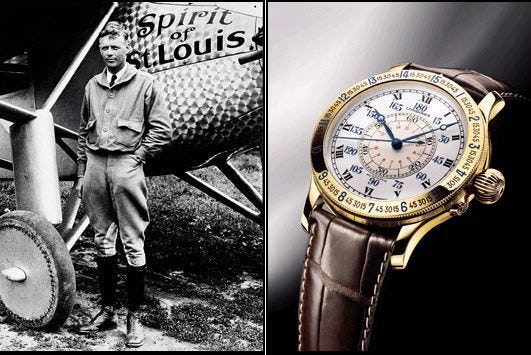
This near miss underscored the need for more precise navigational tools for aviators. Lindbergh realized that an accurate wristwatch could be a crucial aid in long-distance navigation, particularly for determining longitude. This realization led to his collaboration with Longines and the development of the Lindbergh Hour Angle Watch.
The Lindbergh Hour Angle Watch was designed to provide a direct reading of the hour angle in degrees and minutes, allowing pilots to determine their geographical position quickly and accurately. This innovative timepiece was a significant advancement in aviation navigation and played a crucial role in making long-distance flights safer and more reliable.
2. Blancpain Fifty Fathoms
Blancpain’s Fifty Fathoms is often regarded as the first modern dive watch, designed by Blancpain CEO Jean-Jacques Fiechter in 1953. This iconic timepiece was born out of a need for reliable underwater timekeeping instruments during a time when diving was becoming increasingly popular both as a military operation and recreational activity.
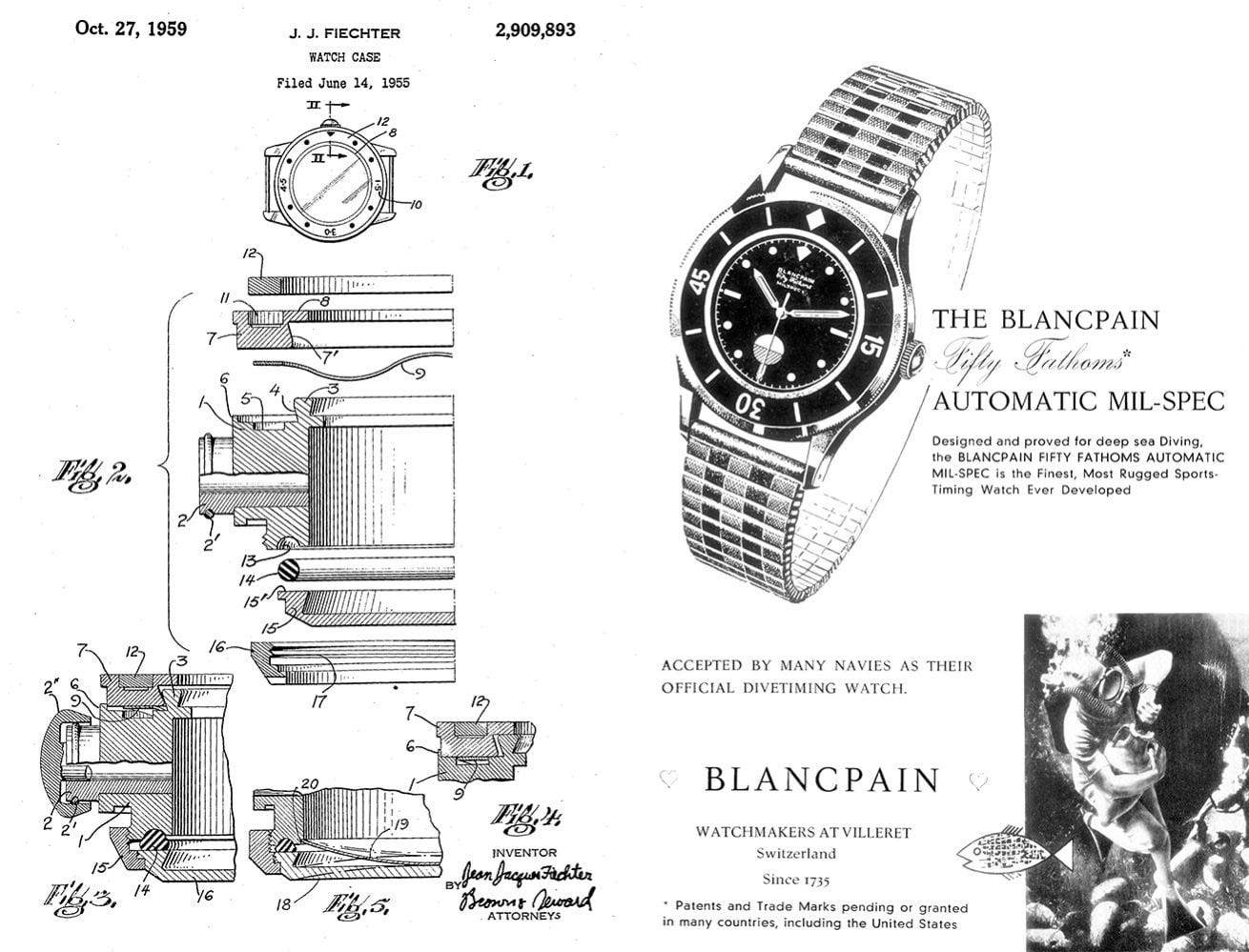
Fiechter, a passionate diver and mountaineer, ensured the Fifty Fathoms set the standard for all future dive watches with its water-resistance, antimagnetic case, self-winding movement, luminescent hands and hour-markers, in addition to a secured rotating bezel. The watch was adopted by the French Combat Swimmers corps and later by the U.S. Navy Seals, making it one of the most iconic timepiece in underwater exploration.

3. Certina DS-2 Super PH500M
In the realm of underwater exploration, the Sealab II experiment conducted by the U.S. Navy in 1965 stands as a significant milestone. This ambitious project aimed to investigate the feasibility of saturation diving and the physiological and psychological effects of humans living and working at great depths for extended periods. The experiment was part of the broader Sealab program, which sought to push the boundaries of human endurance and adaptability in extreme underwater conditions.
The Sealab II habitat, submerged at a depth of 205 feet off the coast of La Jolla, California, was home to a team of "aquanauts" for 15 days. The team carried out a variety of tasks, including salvage work, construction, and scientific experiments, all while living in the underwater habitat, even ulatlizing the services of doplhin name Tuffy to ferry resources to the aquanauts.
The success of the Sealab II experiment demonstrated that humans could indeed live and work productively on the ocean floor for extended periods, a revelation that opened new avenues for underwater research and exploration.
Playing a crucial role in this groundbreaking experiment was the Certina DS-2 Super PH500M. Swiss watchmaker Certina, known for its robust and reliable watches, designed the DS-2 Super PH500M specifically to withstand the extreme conditions of the underwater environment. The watch was chosen for its exceptional water resistance up to 500 meters and its durability under extreme conditions.
4. Rolex Oyster Perpetual (Explorer)
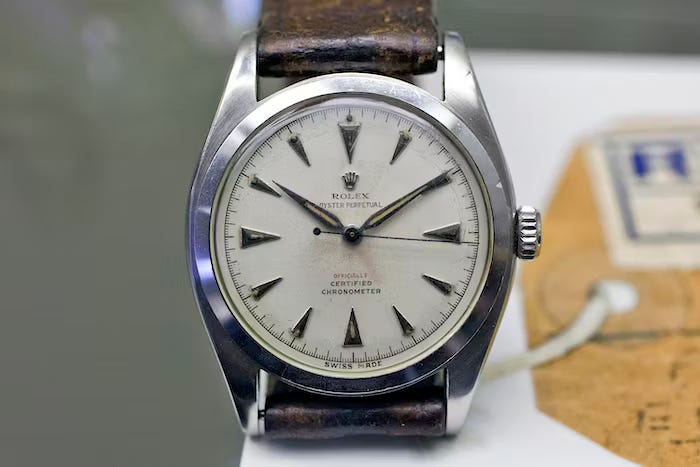
Arguably the most famous mountaineering watch is the Rolex Explorer. Introduced to celebrate the successful 1953 ascent of Mount Everest by Sir Edmund Hillary and Tenzing Norgay earlier that same year, the Rolex Explorer has become a symbol of success and determination.
Interestingly, while it's often reported that Hillary was wearing a Rolex Explorer during his historic ascent, the truth is more nuanced. Hillary was indeed provided with a Rolex his expedition but it was a prototype of the Oyster Perpetual. This watch was subjected to the extreme conditions of the Everest ascent and performed admirably, providing Rolex with valuable insights that would later inform the design of the Explorer.
5. Omega Speedmaster Professional
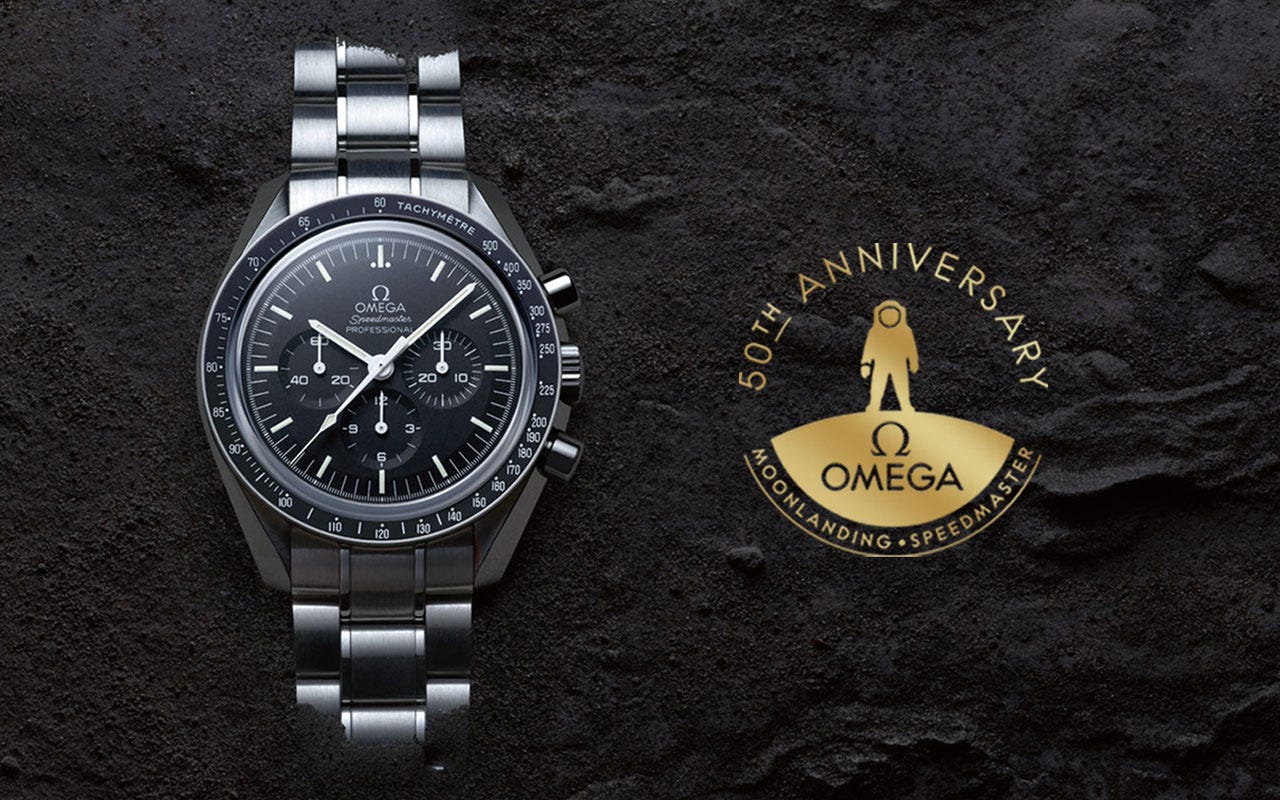
Also known as the "Moonwatch," the Omega Speedmaster Professional is perhaps the most famous exploration watch. It was worn by the astronauts of the Apollo 11 mission in 1969, making it the first watch worn on the moon. The Speedmaster was chosen by NASA for its exceptional performance in extreme conditions, including zero gravity and magnetic fields.
These watches have not only served as reliable tools for explorers but also symbolize the spirit of human exploration. They remind us of our capacity to innovate and overcome challenges as we continue to push the boundaries of what is possible.
 | A guest post by
|